
If you can picture yourself on a university campus overseas in 2027, that picture needs to turn into a working plan today. In international admissions, the strongest study abroad programs fill up faster than most students expect, and the students who get in are almost always the ones who started early.
Every year, capable, hardworking students miss out on their dream universities, not because they weren’t good enough, but because they waited too long to begin. Building a genuinely competitive application takes time. If you’re serious about studying abroad, give yourself 6 to 12 months of focused preparation. That window lets you raise your test scores, apply to meaningful study abroad scholarships, write an application essay that actually sounds like you, and stay protected from last minute visa surprises.
Here’s a month by month breakdown of what your path to a 2027 intake should look like.
None of this has to feel overwhelming if you break it into smaller, manageable pieces. Most students juggle this planning alongside college coursework, internships, or a full time job, so building a realistic calendar matters just as much as the research itself. Treat the next 12 months as a series of small, deliberate steps rather than one giant task looming on the horizon. Following these steps progress will feel far more achievable.
Your Roadmap for 2027
Starting early is the single biggest advantage you have. Admission officers can spot a rushed application from a mile away, so pace yourself instead of scrambling in the final weeks.
Phase 1: Research & Testing
Don’t choose a university just because its name sounds impressive. Take time to think through which of the best countries to study abroad actually align with your career goals: the course structure, the campus culture, and how graduates are doing five years down the line. Build a shortlist of 20 to 30 universities across a few different study abroad programs before you narrow it down. Talk to alumni if you can, and read beyond the admissions brochure.
Then tackle your entrance exams. Depending on where you’re headed, that might mean the GRE, GMAT, SAT, or IELTS, so book your test dates now. Try to have your final scores finalized by August 2026. Testing early is not only about ticking a box; it gives you breathing room to retake an exam if you need to, without derailing your entire timeline. Many applicants underestimate how long test prep genuinely takes alongside a full course load or a full time job.
Phase 2: Getting Your Documents Right
Good grades alone don’t get you in anymore. Admission committees want to understand who you are, not just what you scored on paper.
Your Statement of Purpose (SOP) is the one document that carries the most weight. It’s your chance to explain what drives you and why you belong in the programs you’re applying to. Write more than one draft, and let people you trust, such as mentors, professors, or seniors, read it and push back honestly. At the same time, reach out to professors or managers for Letters of Recommendation (LORs) that speak to your actual strengths rather than generic praise. Give them at least a month; a rushed, copy paste LOR helps no one, least of all you.
Phase 3: Applications & Deadlines
This is the peak season across every corner of international education, when most top universities close their Fall 2027 applications.
Don’t wait until the deadline itself to hit submit. Apply a few weeks ahead instead. It signals that you’re organized, and admission officers notice more than most students realize. Many universities also run rolling admissions, which can work in your favour for early study abroad scholarships too, since there are simply more open seats earlier in the cycle than there are closer to the deadline. Once popular study abroad programs fill their intake, even a strong late application can be turned away.
Phase 4: Visas & Finances
Getting your acceptance letter is a huge milestone, but the work isn’t finished yet. Once you pay your tuition deposit, the university issues your official document, an I-20 in the US or a CAS in the UK. It will be needed before you can apply for your student visa. Start gathering your financial documents early, and book your visa interview the moment your university paperwork comes through, since appointment slots can back up quickly during peak season.
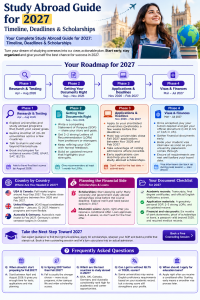
Country by Country: Where Are You Headed in 2027?
Every destination has its own rulebook. So, weighing the best countries to study abroad means understanding what actually matters for each one.
- USA & Canada: Most international students target the Fall intake, which begins around August or September 2027. Top schools usually close applications between November 2026 and February 2027.
- United Kingdom: The UK stays popular thanks to its strong post study work visa route. Mark January 13, 2027 for the UCAS equal consideration deadline, though master’s programs tend to be more flexible on timing.
- Australia & Germany: These two run on entirely different academic calendars. Australia’s main intake falls in February 2027. Whereas Germany’s winter semester begins in October. Plan your testing and documentation around whichever calendar applies to you.
Planning the Financial Side:Scholarships & Loans
An international degree is one of the biggest financial decisions you’ll make, and early planning can genuinely save you money.
- Scholarships: Don’t wait for your acceptance letter before you start searching. Many university specific grants and government backed study abroad scholarships close applications well before the course deadline itself. Start applying for merit based and need based options as early as possible in 2027, and don’t assume you won’t qualify before you’ve actually checked.
- Education Loans: Immigration officers need to know that you can genuinely support yourself while studying overseas. Loan approvals typically take four to six weeks. So apply the moment you receive a conditional offer rather than waiting for the final one.
Your Document Checklist for 2027
Keep every document saved as a clean PDF in one secure folder. Once you finalize your applications for the destinations you shortlisted.
- Academic records: Transcripts, final degree certificates, and official English proficiency scores.
- Application materials: a genuinely personal SOP, two to three strong LORs, and an updated resume.
- Financial and visa proofs: six months of bank statements, proof of any scholarships or loans, a passport valid beyond 2028, and required medical records.
Take the Next Step Toward 2027
The timeline for 2027 is already moving, but you don’t have to navigate it alone. Every student’s situation looks a little different, and the right support can help you make sense of the choices in front of you instead of guessing your way through them.
The right guidance can be the difference between a rejection and an acceptance letter. We can help you find study abroad scholarships, shortlist the right destinations for your goals, sharpen your SOP, and build a genuinely strong profile for the study abroad programs you care about most. Book a free counseling session, and let’s start turning your plans into an actual admission.
Frequently Asked Questions
- When should I start preparing for Fall 2027?
Start between April and August 2026. That window gives you enough time for test prep, document writing, university research, and any unexpected visa delays along the way. - Is Spring 2027 better than Fall 2027?
Fall is usually the stronger choice: it offers more study abroad programs, richer campus life, and wider access to study abroad scholarships than the smaller Spring cycle typically does. - Which are the best countries to study abroad in 2027?
The USA, UK, Canada, Germany, and Australia consistently rank high, offering strong academics, real career opportunities, and diverse student communities across their campuses. - Can I get in without IELTS or TOEFL scores?
Some universities waive English proficiency requirements based on your academic record, but a strong score still strengthens your profile and makes visa approval noticeably smoother. - When should I apply for education loans?
Apply right after you receive a conditional offer. Starting early means your visa process won’t get held up later by last minute banking verification.